
P: +86-18866913099
E: sales01@latelas.com
E: sales01@latelas.com
NO 888 Maltsea Industrial Park, Mine Town, Lanling County, Linyi City, Shandong Province, China
Views: 0 Author: Site Editor Publish Time: 2026-10-03 Origin: Site


Industrial facility managers face a classic capital expenditure dilemma when upgrading pneumatic systems. You might overspend on a Variable Speed Drive (VSD) compressor when you do not need one. Conversely, you might hemorrhage operational funds by installing a fixed-speed unit in a wildly fluctuating environment. A fixed speed screw air compressor operates at peak mechanical efficiency only when running at or near 100% capacity. When demand drops, these machines continue consuming significant power without producing useful output.
We wrote this guide to provide the exact operational thresholds and measurement criteria you need. It will help you determine if your facility's air demand justifies a fixed-speed investment. You will learn how to read your consumption profile, avoid expensive sizing mistakes, and optimize your system architecture. Stop guessing your facility requirements. Follow these guidelines to build a highly reliable, energy-efficient compressed air network.
A fixed speed screw air compressor is financially viable only when baseline air demand remains consistently above 70–80% of the compressor’s maximum capacity.
Idling (unloaded) time is the primary source of wasted energy; a machine running unloaded still consumes 20–40% of its full-load electrical power.
Facilities with highly variable shifts should relegate fixed speed units to "base load" duty, handling the constant demand while a secondary VSD unit manages the peaks.
Conducting a 7-day compressed air audit (data logging) is a non-negotiable prerequisite before finalizing procurement.
Understanding demand stability starts by examining the basic mechanical physics of rotary screw equipment. An industrial air compressor running on a fixed-speed drive essentially operates in a binary fashion. It runs fully loaded or fully unloaded. When the inlet valve opens, the rotors compress incoming air at maximum capacity. When the system reaches its target pressure, the inlet valve closes. The motor continues spinning, but the unit stops producing air. This unloaded state keeps the motor ready for the next cycle. However, it wastes immense amounts of energy.
Engineers rely on the 80% utilization rule to define stability quantitatively. If your manufacturing floor requires 80% to 100% of the compressor’s rated Cubic Feet per Minute (CFM) continuously during operational hours, we consider the demand stable. Operating within this narrow upper band ensures the inlet valve remains open. The machine performs actual pneumatic work rather than spinning idly. Dropping below this 80% threshold forces the machine into inefficient load and unload cycles.
Recognizing unstable demand patterns early prevents costly procurement mistakes. You must evaluate your operational cadence before committing to a fixed-speed system. Look for specific red flags indicating high variability. If your facility exhibits any of the following traits, a standalone fixed-speed solution will likely fail your efficiency goals:
Heavy intermittent tool usage: Sandblasters or large impact wrenches draw massive air volumes for short bursts. They leave the system idling during downtime.
Single-shift peaks: Running a full production line during the morning but scaling back to a skeleton crew at night creates massive demand imbalances.
Frequent pressure drops: Experiencing sudden dips in line pressure indicates your system struggles to match erratic flow requirements quickly.
Weekend shutdown periods: Keeping a large fixed-speed machine online for minor weekend maintenance tasks forces it into prolonged, wasteful unloaded states.
Never size your next compressor based solely on the nameplate ratings of your pneumatic equipment. Manufacturers often overstate equipment air consumption, or they assume a 100% duty cycle. Real-world tools rarely operate continuously. Adding up nameplate data inevitably leads to purchasing an oversized machine. Instead, you must conduct a formal, data-driven compressed air audit. Data logging reveals the exact truth of your consumption profile.
You must differentiate between pressure requirements and flow volume. Pressure, measured in Pounds per Square Inch (PSI), represents the force needed to actuate a cylinder or spin a tool. Flow, measured in CFM, represents the actual volume of air moving through the pipes. Demand stability depends entirely on a consistent CFM draw over time. Spikes in CFM indicate unstable demand. You can maintain perfect PSI, but if your CFM fluctuates wildly, your fixed-speed machine will cycle rapidly.
Time-based variables heavily influence your baseline demand calculations. Shift changes introduce sudden drops in consumption. Lunch breaks often bring entire production lines to a halt for thirty minutes. Weekend operations might only require 10% of your total capacity. A proper audit captures all these nuances. Install flow meters and power loggers on your existing system. Let them record data for at least seven full days. This captures the complete rhythm of your facility.
Table 1: Key Differences Between Stable and Unstable Profiles
Profile Metric | Stable Demand Traits | Unstable Demand Traits |
|---|---|---|
CFM Variance | Stays within 10-20% of maximum flow all day. | Fluctuates by 30-60% depending on active tasks. |
Shift Consistency | 24/7 continuous operations with minimal drops. | Heavy dayshifts followed by quiet nightshifts. |
Equipment Type | Continuous robotic lines, sorting machines. | Intermittent blast cabinets, heavy impact tools. |
Idling Frequency | Rare. The machine stays loaded for long periods. | Frequent. The machine loads and unloads constantly. |
Best practices for measuring your consumption include checking for artificial demand. Artificial demand occurs when operators crank up regulators to overcome pressure drops caused by tiny leaks. Fix these leaks before you log your data. Logging a system full of leaks gives you inflated CFM numbers. It tricks you into buying a larger machine than you actually need.
Installing a fixed-speed unit in an unstable environment carries severe financial penalties. The primary risk revolves around the cost of idling. As mentioned earlier, an unloaded compressor produces zero air. Yet, it still consumes 20% to 40% of its full-load electrical requirement. This wasted power accumulates rapidly on your monthly utility bills. You pay for electricity, but you get absolutely no compressed air in return.
Consider a conservative calculation example. Imagine a 100-horsepower fixed speed electric compressor operating in a fluctuating facility. It runs 6,000 hours per year. Because demand varies, the machine spends 40% of its time (2,400 hours) running unloaded. During this unloaded time, it still draws roughly 30 horsepower. At a typical industrial rate of $0.12 per kilowatt-hour, this idling phase wastes thousands of dollars annually. You literally burn cash just to keep the motor spinning.
Financial waste extends beyond the electrical meter. Miscalculating demand stability dramatically accelerates mechanical wear and tear. If demand drops too low, the compressor tries to avoid idling by shutting down completely. When demand returns seconds later, it restarts. This phenomenon is called short-cycling. Frequent motor starts generate massive amounts of heat. This heat degrades the motor insulation. It destroys bearings. It burns out electrical contactors.
Most manufacturers engineer their motors to handle a specific number of starts per hour. Exceeding this limit voids warranties and guarantees premature failure. A stable demand profile prevents short-cycling. The machine powers on, loads up, and stays loaded. By ensuring you have the right demand profile, you protect your capital investment. You keep operational expenses low. You extend the lifespan of your mechanical components for decades.
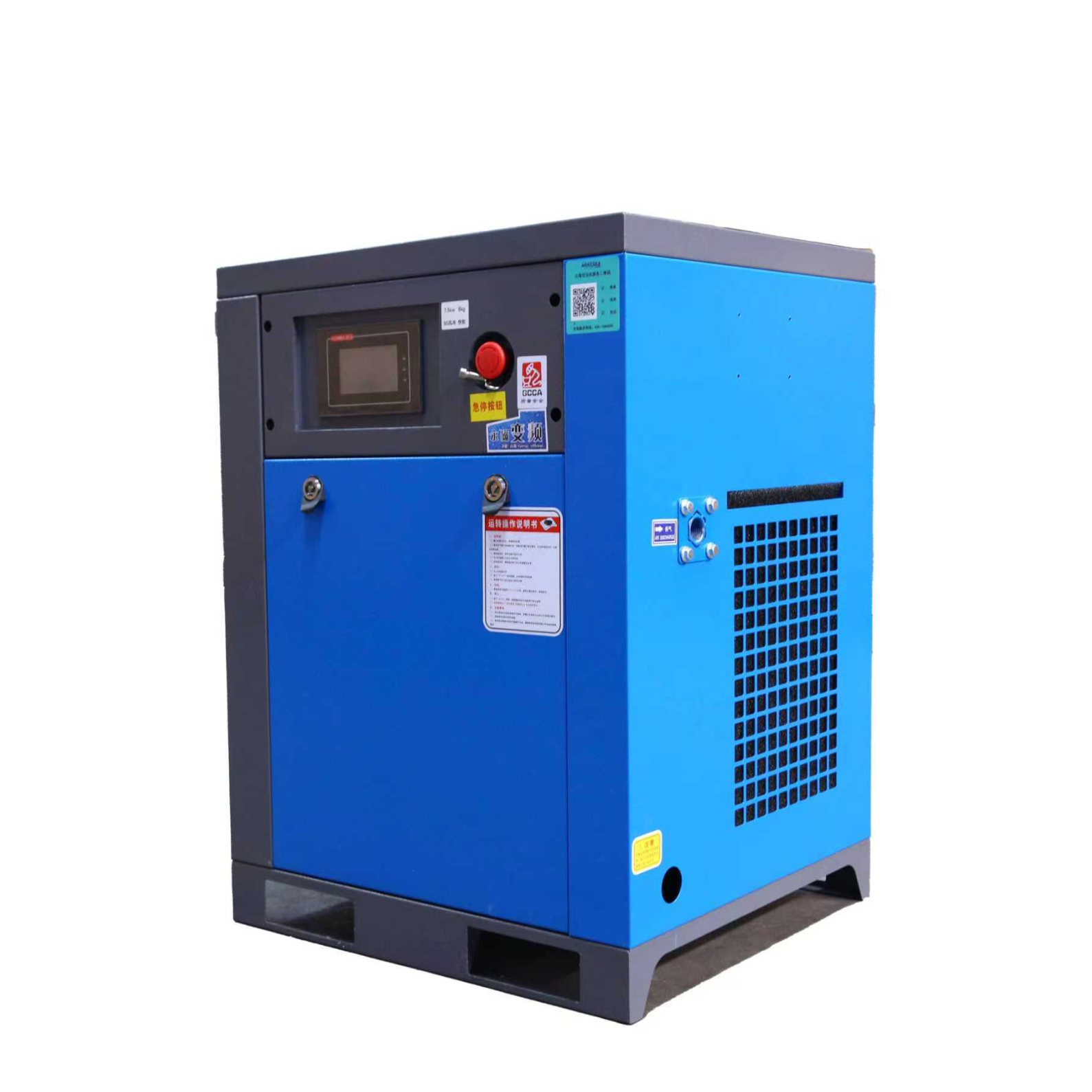
Choosing the right compressor technology requires honest evaluation of your facility profile. Fixed-speed machines remain the undisputed champions in specific environments. They feature simpler electrical components, robust drivetrains, and excellent longevity. They shine in 24/7 manufacturing plants. Facilities running continuous robotic assembly lines benefit immensely from them. Glass manufacturing, paper mills, and massive textile plants provide the perfect continuous load.
In these high-stability environments, a fixed-speed machine outlasts and outperforms a VSD. Variable frequency drives introduce delicate electronics into the cabinet. These electronics hate heat, dust, and electrical interference. If your plant runs flat out all day, a VSD offers no energy savings. You simply pay a premium for a variable drive you never use. Fixed speed wins when predictability rules your production floor.
Conversely, VSD technology becomes mandatory when demand fluctuates drastically. Industry standards suggest upgrading to VSD if your daily flow varies by more than 30%. A VSD alters the motor's RPM to match the exact CFM requirement. It eliminates unloaded idling entirely. If you only need 40% of your maximum flow, the motor slows down and consumes only 40% of the power. The energy savings quickly offset the higher initial purchase price.
However, the most efficient modern facilities utilize a hybrid architecture called the base-load/trim strategy. They do not rely on a single massive compressor. Instead, they install a large stationary screw air compressor to handle the 24/7 constant demand. This machine acts as the base load. It runs at 100% capacity all day. They then pair it with a smaller VSD unit. The VSD acts as the trim machine. It speeds up and slows down to handle the variable peaks, shift changes, and minor fluctuations. This strategy maximizes the strengths of both technologies.
Even the most stable manufacturing environments experience minor, short-term demand spikes. You can prevent these small fluctuations from disrupting your fixed-speed compressor through strategic system design. The most effective strategy involves installing oversized air receiver tanks. Air tanks act as massive energy batteries for your pneumatic network. They store compressed volume ready for immediate use.
Engineers recommend installing both wet and dry air receivers. Place a wet tank before the air dryer to capture initial moisture and buffer the compressor. Place a dry tank after the dryer to handle sudden bursts from the plant floor. A large dry tank supplies the sudden CFM demand of a heavy tool. The fixed-speed machine never even notices the spike. It continues running smoothly without rapidly cycling into an unloaded state.
Adjusting your pressure bands offers another excellent stabilization tactic. A pressure band represents the difference between your cut-in (load) and cut-out (unload) settings. Narrow pressure bands force the compressor to cycle rapidly to maintain a tight PSI window. Widening this band artificially creates stability. Allowing the system pressure to drop slightly further before the machine loads gives the motor longer rest periods. It reduces the total number of transition cycles per shift.
Finally, examine your system piping. Poor piping design ruins demand stability. Small diameter pipes create massive pressure drops due to friction. The compressor fights this friction, loading and unloading constantly to push air through a bottleneck. Upgrading to larger diameter, smooth-bore aluminum piping eliminates these restrictions. It allows air to flow freely to the production floor. Proper piping stabilizes artificial demand and allows the compressor to run exactly as the manufacturer intended.
A fixed-speed machine remains one of the most durable and cost-effective solutions for industrial air generation. It features a straightforward mechanical design, easy maintenance routines, and exceptional longevity. However, its financial viability depends entirely on deploying it in the right environment. You must guarantee a highly stable demand profile to unlock its efficiency. Dropping below the 80% utilization threshold leads to expensive idling and mechanical stress.
Do not rely on guesswork or equipment nameplates when planning your next capital upgrade. We strongly recommend booking an independent compressed air audit. Rent a data logger and monitor your system for a full week. Analyze the CFM fluctuations across all shifts. Armed with real data, you can confidently submit your request for proposal. Proper sizing ensures your facility enjoys reliable air power and rock-bottom operational costs for years to come.
A: It will enter a frequent load/unload cycle. The machine will consume excess electricity while producing no usable air during the unloaded phase. Furthermore, trying to avoid idling by shutting down entirely causes premature wear on the motor and electrical contactors due to excessive short-cycling.
A: While aftermarket VFDs exist, retrofitting is generally not recommended. Modifying a fixed-speed machine limits motor cooling capabilities at lower speeds and almost always voids the manufacturer warranty. It is far better to purchase the correct variable speed technology upfront if your demand dictates it.
A: A standard industry rule of thumb requires 1 to 3 gallons of storage per CFM of compressor capacity. Highly stable continuous applications can skew toward the lower end of this metric. Fluctuating environments require 4 or more gallons per CFM to prevent the compressor from rapid cycling.
