
P: +86-18866913099
E: sales01@latelas.com
E: sales01@latelas.com
NO 888 Maltsea Industrial Park, Mine Town, Lanling County, Linyi City, Shandong Province, China
Views: 0 Author: Site Editor Publish Time: 2026-09-30 Origin: Site


Installing compressed air equipment goes far beyond a simple plug-and-play operation. The specific location you choose directly dictates operational efficiency, equipment lifespan, and daily maintenance overhead. Poor placement leads directly to restricted airflow, dangerous thermal shutdowns, and costly pressure drops. It also rapidly accelerates wear on expensive intake filters and synthetic lubricants. We built this guide to give facility managers and plant engineers a robust, evidence-based evaluation framework. You will learn how to properly assess factory floor space and plan highly efficient utility routing. We also cover how to mitigate major environmental and safety compliance risks before finalizing your equipment footprint. By understanding these critical spatial constraints early, you avoid expensive post-installation modifications. Proper site planning ensures your pneumatic systems operate reliably and efficiently for decades.
Ambient conditions dictate performance: Intake air must be clean, cool, and dry to prevent premature component degradation and efficiency losses.
Clearance is non-negotiable: Minimum 3-foot (1-meter) clearance on all sides is required for safe maintenance and adequate cooling.
Centralized vs. Decentralized: Dedicated compressor rooms offer better noise and climate control, while factory-floor placement minimizes pipework and pressure drops.
Utility proximity lowers installation costs: Locating the unit near adequate electrical panels and compliant condensate drainage reduces structural modification costs.
When you install a stationary screw air compressor, you must rigorously evaluate the surrounding environment. Airborne contaminants pose a severe threat to internal components. Dust, chemical vapors, and high humidity destroy air filters rapidly. They also degrade air-oil separators and break down lubricating fluids. You must assess the facility for these specific hazards before selecting a final spot.
Ambient temperature zones require equal attention. Cool air is dense air. Compressors work much more efficiently when they ingest dense, cool air. Conversely, hot air forces the machine to work harder to achieve the same pressure output. Every 10°F increase in intake air temperature reduces compressor efficiency by roughly 1-2%. You must avoid placing the unit in naturally hot zones.
Proximity to high-demand zones presents a complex engineering trade-off. You must analyze the physical distance from the compressor to primary pneumatic applications. Shorter distances reduce friction inside the delivery pipes. This minimizes pressure drop and saves energy. However, locating the machine too close to the production line often exposes it to harmful dust. You must calculate the cost of running extensive piping infrastructure. Compare this expense against the energy loss caused by pressure drops over long distances.
Ventilation and heat dissipation remain critical success factors. These machines convert a massive portion of their electrical input into raw heat. A poorly ventilated space will quickly become an oven. You must determine if the proposed space requires auxiliary exhaust fans. In many cases, you will need dedicated ducting to prevent localized overheating. Properly routed ductwork pushes hot exhaust air outside the building. You might also account for heat recovery potential. Many modern facilities capture this exhaust heat to warm adjacent factory spaces during winter months.
Intake Air Temperature (°F) | Relative Efficiency Loss | Recommended Facility Action |
|---|---|---|
60°F - 70°F | 0% (Baseline) | Maintain standard room ventilation. |
80°F | ~2% | Monitor ambient temps; increase fresh air intake. |
90°F | ~4% | Install auxiliary exhaust fans to remove heat. |
100°F+ | ~6% or higher | Requires dedicated exhaust ducting and cooling. |
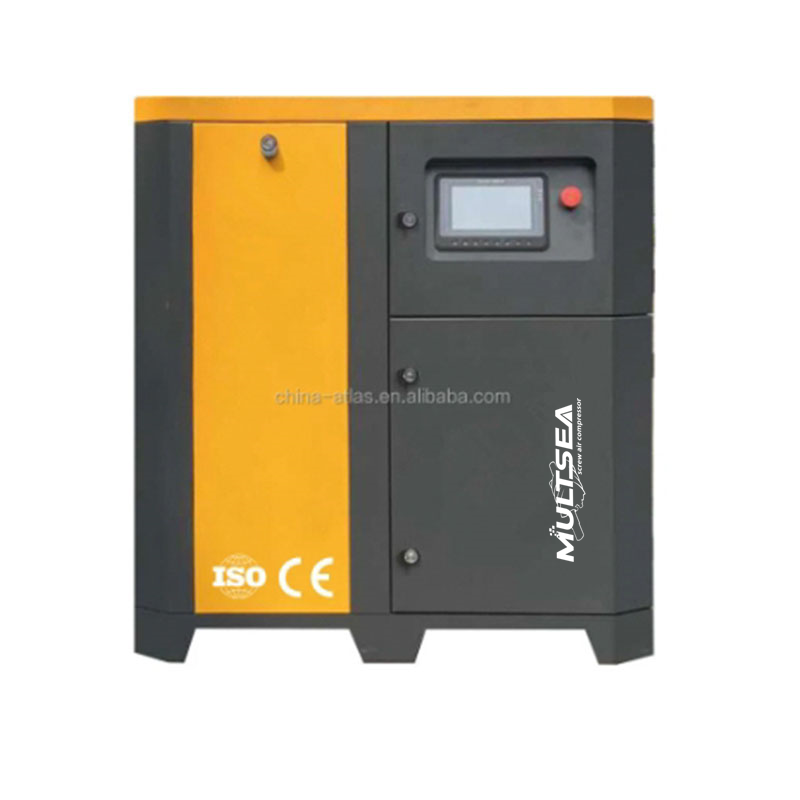
Facility managers constantly debate whether to build a dedicated room or place the machine directly on the floor. The centralized dedicated room represents the industry best practice. It provides exceptional protection for your machinery. First, it isolates heavy industrial noise from your workforce. This physical separation helps facilities easily maintain OSHA compliance regarding workplace noise exposure. Second, a closed room protects the unit from factory floor dust and welding fumes. Finally, it allows for precise climate and ventilation control.
However, implementing a dedicated room carries a harsh reality. It requires dedicated square footage that you could otherwise use for production. It also demands higher initial capital. You must pay for structural walls, specialized ducting, and long piping runs to the production floor.
The decentralized point-of-use placement offers an attractive alternative. You place the equipment right next to the assembly line. This approach delivers lower installation costs upfront. You experience minimal pressure drop because the piping runs are incredibly short. Operators and maintenance teams gain immediate access to the machine.
Yet, point-of-use placement carries substantial risks. It directly exposes the machine to raw manufacturing byproducts. Airborne grit and moisture will clog the intake filters faster. This localized placement also increases noise levels for nearby workers. It complicates heat management because the unit dumps hot exhaust air directly into the working environment.
You need a logical decision framework to solve this. Weigh the upfront construction cost of a dedicated room carefully. Compare it against the operational benefits of extending the lifespan of an industrial screw compressor. A clean, cool, and quiet room typically yields better long-term reliability. It reduces emergency breakdowns and cuts down on frequent consumable replacements.
You cannot simply place heavy rotating machinery on standard flooring. Load-bearing capacities and vibration mitigation demand strict engineering oversight. You must specify floor load requirements early in the planning phase. These calculations must include both the static weight of the unit and its dynamic operational weight. Concrete flooring must feature an adequate PSI rating to prevent cracking over time.
Vibration control is equally important. You must evaluate the need for vibration isolation pads versus rigid floor bolting. If the machine sits near highly sensitive precision machinery, vibration pads are mandatory. They absorb the low-frequency humming that could otherwise disrupt CNC machines or coordinate measuring equipment. Conversely, rigid bolting might suffice if the machine sits on an isolated concrete pad away from production zones.
Serviceability clearances represent a non-negotiable installation rule. You must define spatial requirements before you move the equipment indoors. Industry standards require a minimum of 36 to 42 inches of clearance around the entire unit. You must also account for adequate overhead clearance. Mechanics need room to remove heavy top panels safely.
Restricted access creates massive hidden costs. It leads to longer downtime for routine oil changes. Cleaning clogged coolers becomes a frustrating, time-consuming ordeal. Servicing the main air-end is nearly impossible without proper elbow room. You must also account for future removal or replacement scenarios. Ensure your facility hallways and doorways allow easy forklift or overhead crane access.
Static Weight Limits: Verify the concrete slab can support the stationary weight without settling.
Dynamic Vibration: Install isolation pads if adjacent tools require high-precision stability.
Maintenance Access: Maintain a strict 36-inch perimeter to comply with safety and electrical codes.
Overhead Clearance: Leave enough vertical space for crane rigging and exhaust duct installation.
Electrical infrastructure usually dictates exactly where you can place the machine. You must assess the physical proximity to your main switchgear. An electric screw air compressor requires a massive, stable power supply. It needs dedicated circuits with appropriate, easily accessible safety disconnects. If you install the unit far from the primary electrical panel, you will encounter severe voltage drops. Long, heavy-gauge wire runs are also incredibly expensive. Keep the machine as close to the main power feed as safely possible.
Condensate drainage often gets ignored during initial planning. Compressing atmospheric air generates large volumes of liquid water daily. This water contains trace amounts of synthetic lubricating oil. You must identify clear routing paths for these condensate drains. The chosen location must easily accommodate a certified oil-water separator.
Environmental compliance is strictly enforced regarding wastewater. You cannot dump oily condensate directly into municipal floor drains. The oil-water separator strips out the lubricants, allowing safe water discharge. Ensure your installation spot has enough room for this vital accessory. It also needs gravity-fed access to an approved floor drain.
Cooling water supply requires planning if you select a water-cooled model. For these variants, evaluate the proximity to existing cooling towers. You might also connect to closed-loop facility water systems. Locating the unit near existing water headers minimizes costly plumbing runs. It also reduces the strain on external water pumps. Ensure you have proper isolation valves installed at the connection points for easier future maintenance.
Many facilities make critical placement errors that ruin equipment within months. You must actively avoid these common installation traps.
The Boiler Room Mistake: Never install the machine in a room housing boilers or massive furnaces. High ambient heat essentially guarantees continuous thermal shutdowns. Radiant heat destroys rubber seals, hoses, and electrical components rapidly.
The Exhaust Loop: Avoid placing the unit where it ingests exhaust air from other machinery. Do not place it near loading docks where it breathes in diesel fumes. Most importantly, ensure it does not ingest its own hot exhaust. Poorly routed exhaust ducts often dump hot air right back toward the intake side.
Underestimating Fixed Speed Thermal Output: A fixed speed screw air compressor generates a continuous, massive heat load. Running continuously at full capacity requires aggressive heat dissipation planning. Variable speed units might modulate and cool down, but fixed-speed models pump out maximum heat constantly. You must plan ventilation accordingly.
Ignoring Future Scalability: Facilities grow, and air demand increases. Failing to leave physical space for a redundant backup unit is a major error. You should also ensure your pipe-header capacity can handle double the current airflow. Installing oversized headers today saves thousands of dollars during future expansions.
We highly recommend marking out the exact footprint with floor tape before final approval. This visual check ensures doors open fully, panels remove easily, and forklift paths remain clear. Once you bolt the machine down and run rigid steel piping, moving it becomes a logistical nightmare.
The physical installation location acts as the primary driver of a compressor's long-term reliability and operational efficiency. You cannot expect peak performance if the machine breathes dirty, hot air in a cramped corner. Proper placement directly prevents thermal shutdowns, reduces piping pressure drops, and lowers costly maintenance overhead. It also ensures you remain fully compliant with strict environmental and safety regulations.
We advise readers to take a proactive approach to facility planning. Conduct a thorough site audit with a certified pneumatic systems engineer. Map out the intake airflow patterns, piping geometry, and electrical constraints carefully. Finalize these exact details before pouring new concrete or routing heavy utilities. Investing time in proper site evaluation today guarantees decades of smooth, efficient manufacturing tomorrow.
A: Yes, but it requires substantial environmental protection. You must install a specialized weatherproof enclosure featuring NEMA 4 or 4X electrical components. The setup also requires anti-condensation heaters for the motor and controls. Furthermore, you must install freeze-protection trace heating for all condensate lines and drains to prevent winter pipe bursts.
A: You should place it as close as safely possible to the primary demand zones. This minimizes extensive piping and costly pressure drops. However, you must strictly balance this proximity against OSHA noise compliance limits. The chosen location must also guarantee clean, cool airflow free from manufacturing dust.
A: Structurally, the foundation and clearance requirements remain identical. However, fixed-speed units often run hotter because they operate continuously at full load. This requires much stricter attention to room ventilation. You will likely need more aggressive exhaust ducting and higher-capacity cooling fans compared to a variable speed drive setup.
A: Dedicated rooms successfully isolate heavy noise from the main production floor. However, the interior of the compressor room itself will often exceed 85 dBA. Because of this, proper safety signage is legally required on the doors. Maintenance staff must follow strict hearing protection protocols before entering the operating space.
